Identity of Australian Women during the early 1900s
The identity of women in Australia changed dramatically during the 20th century. World War I was the window of opportunity for women to venture into the workforce to support their families whilst men were, typically, at war. Despite this;
“It was assumed that women would not have to support a family, although many widows, deserted wives and even daughters did so. However, this belief ensured that wages for women were significantly lower than those paid to men doing the same work…” — “Women Make Australian History — The Suffragette Era 1880-1914” by Michael Dugan and Anne Gunter
Women were still considered lesser than men, rather than equal, although they worked long hours for money to support themselves or their families.
“Women remained in demand as domestic servants because, until after the First World War, many families whose breadwinner had a white-collar job could afford a maid’s keep and low wages…” — “Women Make Australian History — The Suffragette Era 1880-1914” by Michael Dugan and Anne Gunter
This meant that women were either housewives with little to no significant education, or maids working for another family.
In Australia, during the 1920s and the Great Depression, employment fluctuated and fell dramatically at the fall of the Wall Street Market. Almost one third of the workforce was unemployed due to the lack of demand for goods. Therefore workers were superfluous. However, women played a very important role while men were unable to work because they were required to be paid more.
“In some families, it was the mother’s or daughter’s wages that kept the household going… in later years, some union leaders, mainly men, worried that this might happen again. This persuaded them to support increase in women’s wages to a level nearer to that of men’s for equal work.” — “Women Make Australian History — Between the Wars 1919-1938” by Michael Dugan and Anne Gunter
Women were desirable employees because they did not need to be paid as much.
In legal context, gender equality was an issue for women. Marriage in Australia during the early 1900s was still a matter of gaining property off a richer family. Being unmarried with a child was frowned upon but having a child within an unhappy marriage was not — as long as everything was happily bound in a legal sense. Marriage was a very different concept around a century ago in Australia compared to the circumstances in the present day.
“Although a divorce was not easy to obtain, marriages could fail, and it was usually the women who continued to provide for any children.” — “Women Make Australian History — The Suffragette Era 1880-1914” by Michael Dugan and Anne Gunter
[Above] Zoe, Mrs Mary, Marjorie and Chloe Gullick, outside Altoncourt, Killara (ca. 1909)
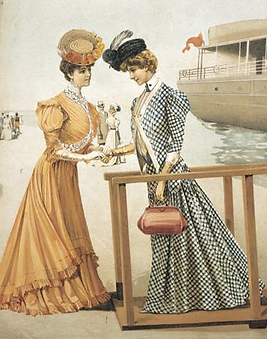
Fashion wise, women wore conservative clothing. Underneath their dresses, typically with a turtle-neck-type style that reached the ankles, they would wear corsets to achieve unnaturally small waists. Gloves were a common piece of clothing as well as wide brimmed, decorative sun hats.